What people often mean when they search “Botox”
Forehead lines
Horizontal lines may be strongly influenced by frontalis movement, but brow position, eyelid function and existing asymmetry also matter.
Frown lines
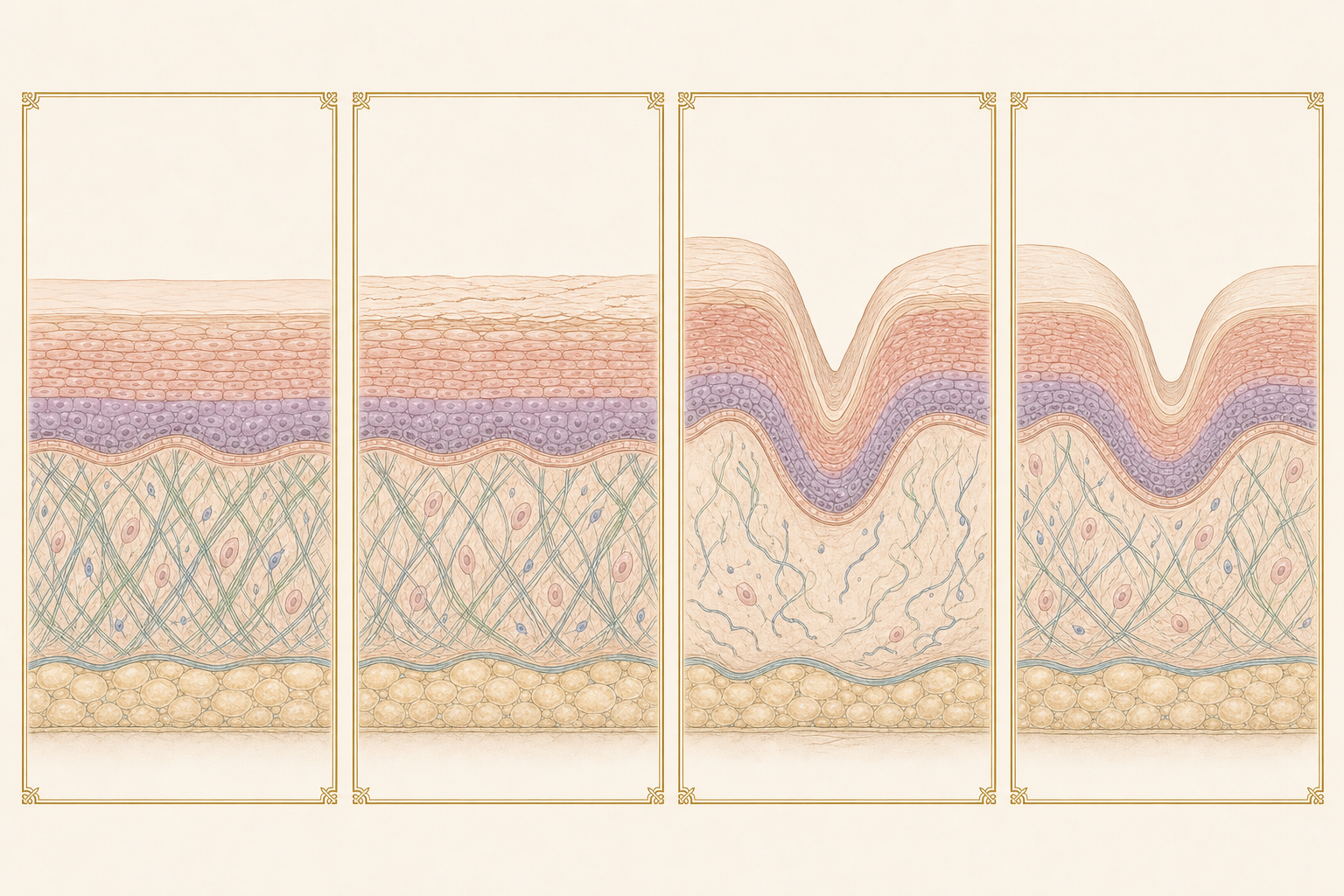
Glabellar lines form through repeated movement of several muscles. A fixed crease may remain visible at rest even when movement changes.
Crow’s feet
Lines beside the eyes reflect expression, skin quality and sun exposure. Treating muscle movement does not replace photoprotection or skin care.
Other concerns
Botulinum toxin medicines have medical and cosmetic licences that vary by exact product. A search term is not evidence that a use is licensed or suitable.
What a prescriber-led assessment considers
- The concern at rest and during natural movement.
- Facial anatomy, brow and eyelid position, smile pattern and baseline asymmetry.
- Medical conditions, medicines, previous response, allergy, pregnancy or breastfeeding.
- Whether a skin, volume, structural or no-treatment route is more appropriate.
- The exact licensed medicine, dose and aftercare if—and only if—a prescription is appropriate.
Common and important risks
Depending on product and treatment area, information supplied with licensed medicines describes effects such as injection-site discomfort, bruising, headache, temporary asymmetry, eyelid or brow droop and unwanted weakness in nearby muscles. Rare spread of toxin effect can cause swallowing, speech or breathing difficulty and requires urgent medical attention.
Why “three areas” is not a diagnosis
Counting marketing areas does not replace anatomy, dose planning or a prescription. Two people asking about the same line may need different plans—or no prescription treatment at all.
Balanced alternatives
Daily broad-spectrum SPF, a tolerable retinoid routine, peels, microneedling, skin boosters, biostimulation, filler or surgery may be discussed for different causes of visible ageing. None is a direct substitute in every case, and combining treatments can add risk and downtime.