From £45
Hydration facial
A gentle cleanse, humectant layer and cream finish selected by tolerance.
Explore this route ↗Lipids, water and barrier function
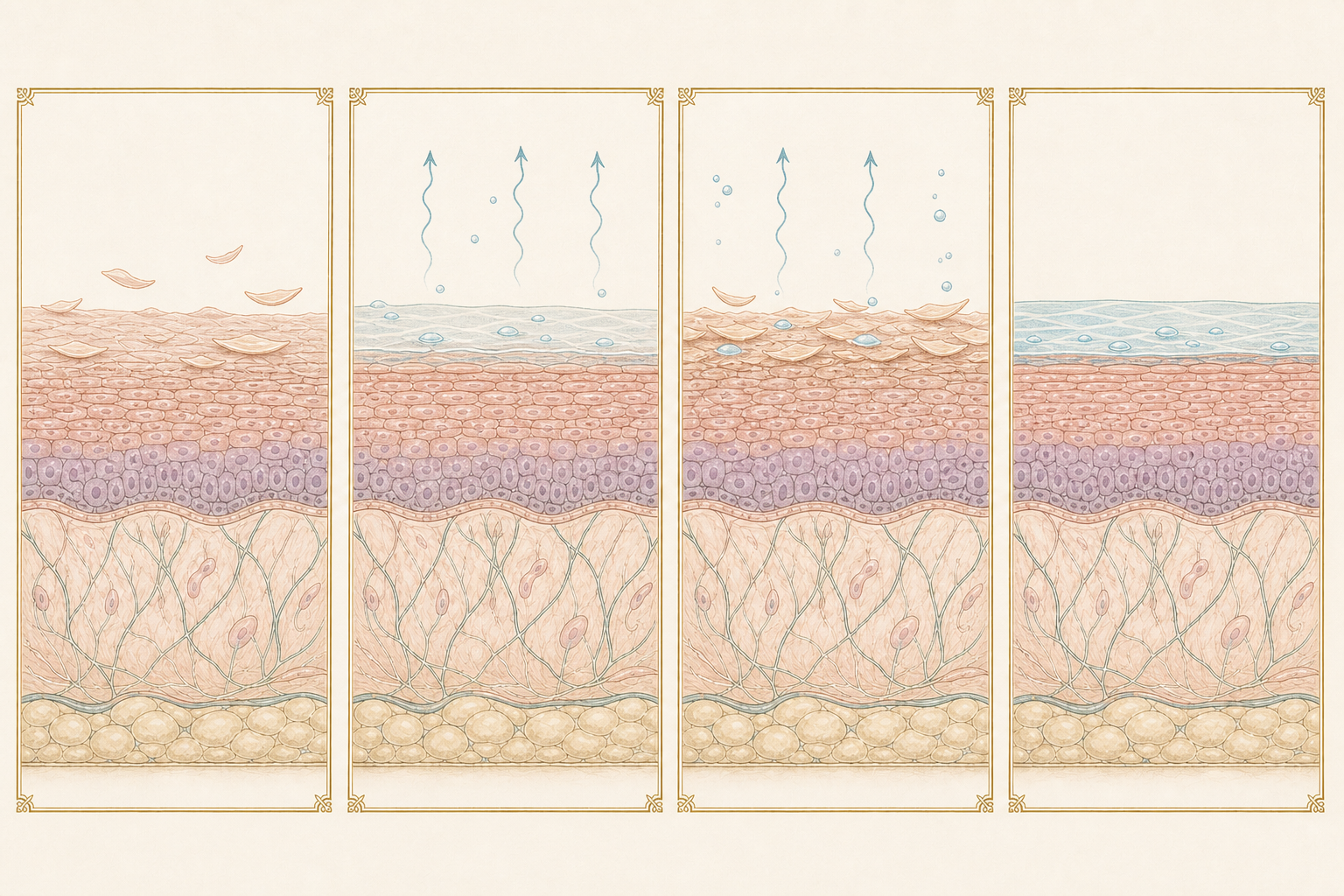
Dry skin lacks enough surface lipids; dehydrated-looking skin has reduced water content. Oily skin can still feel dehydrated, and both can overlap.
What it means
Dry skin is a skin type or condition associated with reduced oils and barrier lipids, often feeling rough or flaky. 'Dehydrated skin' is a cosmetic description for reduced water content and tightness. Weather, over-cleansing, active products and inflammation can contribute.
Options at Idalia
Treatment is selected after your concern, skin response, medical history, suitable product route and realistic benefit have been reviewed.
From £45
A gentle cleanse, humectant layer and cream finish selected by tolerance.
Explore this route ↗From £65
A no-heat barrier route for stable redness-prone or easily irritated skin.
Explore this route ↗Consultation
Compares topical support with injectable or needling routes.
Explore this route ↗New, changing, painful, severe or unexplained symptoms should be assessed by a GP, pharmacist, optometrist, dermatologist or another appropriate clinician before cosmetic treatment.
From education to treatment
Dry skin lacks enough surface lipids, while dehydrated-looking skin lacks water and can still be oily. Idalia uses that distinction when selecting Korean skincare, hydrating facials, barrier-support products and treatment intensity.
Build a Korean skincare routine