Consultation
Skin consultation
Separates a suspected melasma pattern from other pigment concerns and signposts diagnosis.
Explore this route ↗Chronic, trigger-sensitive pigmentation
Understand why melasma is different from an isolated dark mark and why visible-light protection and long-term management matter.
What it means
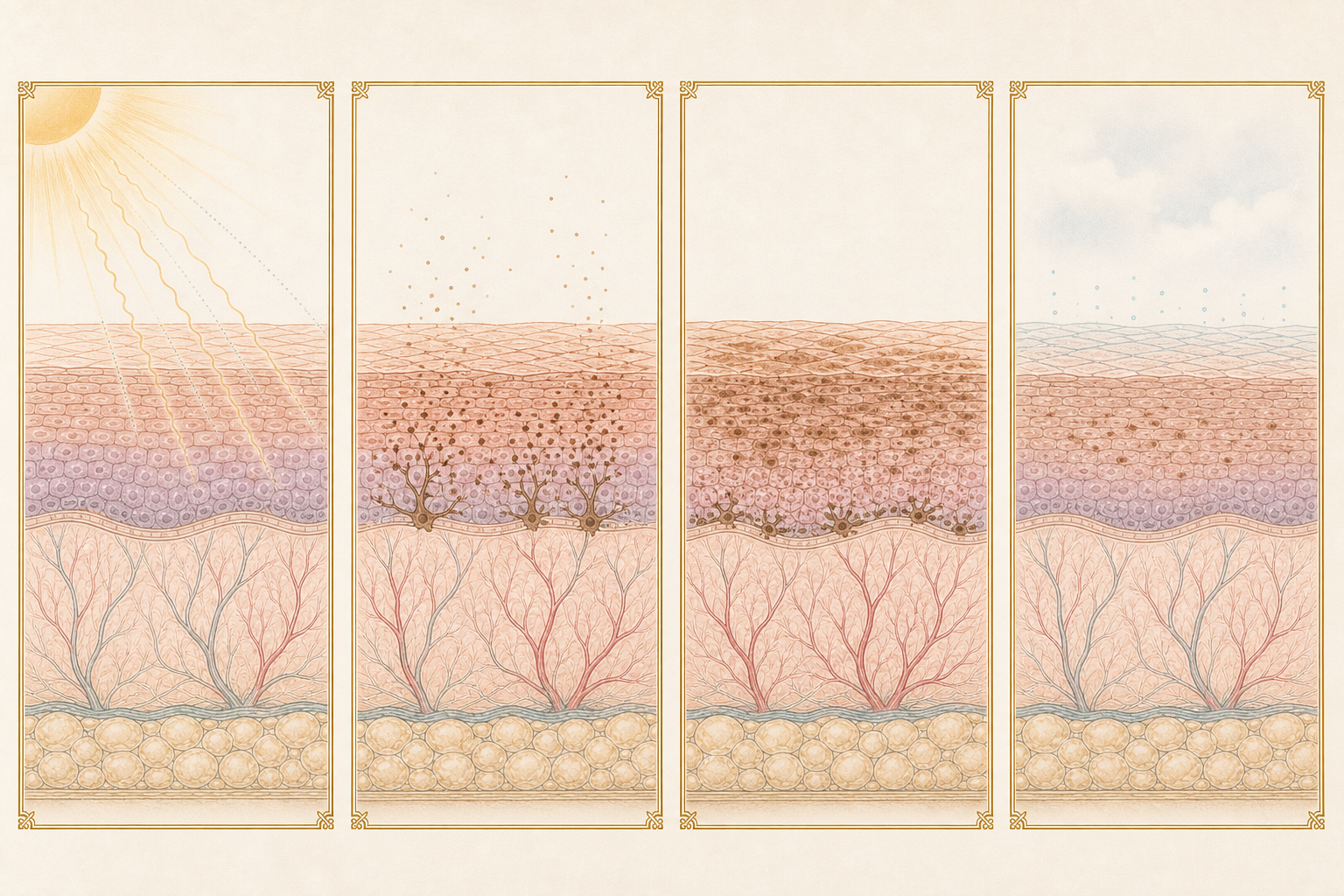
Melasma usually appears as symmetrical brown or grey-brown facial patches. Ultraviolet light, visible light, hormones and genetic susceptibility can contribute. It is chronic and can recur, so aggressive treatment that creates inflammation may make the pattern harder to manage.
Options at Idalia
Treatment is selected after your concern, skin response, medical history, suitable product route and realistic benefit have been reviewed.
Consultation
Separates a suspected melasma pattern from other pigment concerns and signposts diagnosis.
Explore this route ↗From £45
Barrier support without heat, abrasion or an automatic peel.
Explore this route ↗Referral
Prescription options and procedure selection when formal treatment is required.
Explore this route ↗New, changing, painful, severe or unexplained symptoms should be assessed by a GP, pharmacist, optometrist, dermatologist or another appropriate clinician before cosmetic treatment.
From education to treatment
Melasma is trigger-sensitive and can recur, so Idalia does not promise a one-session cure. Skin-barrier support, broad-spectrum and visible-light protection, carefully selected actives and restrained professional treatments may form a staged plan.
Explore skin and peel consultations