From £45
Barrier-first facial
Reduces unnecessary irritation while the cause is controlled.
Explore this route ↗What remains after inflammation
Separate brown or grey post-inflammatory hyperpigmentation from red post-acne marks and true indented or raised scars.
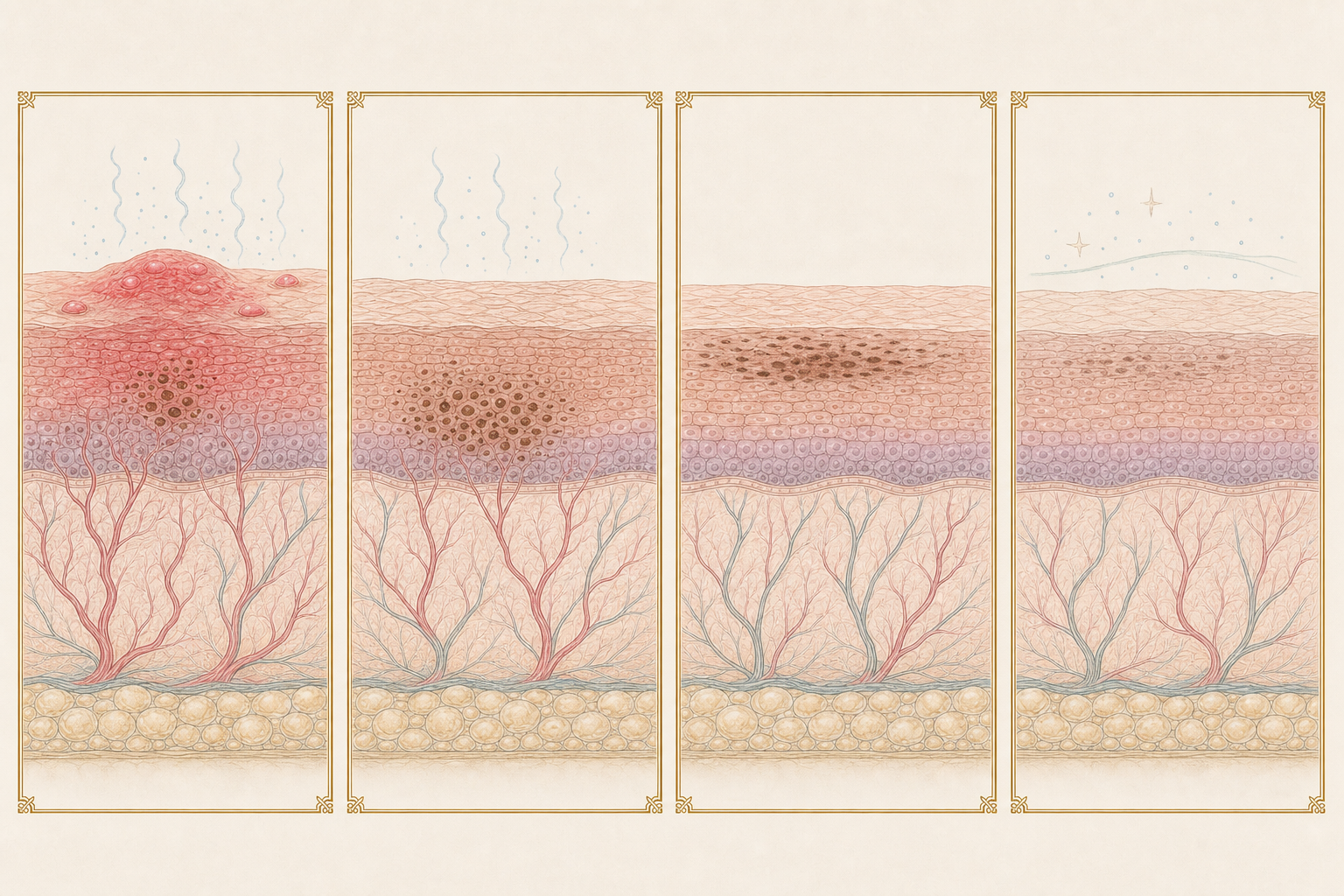
What it means
After acne, eczema, picking, a burn or another injury settles, colour can remain. Brown, grey or blue-brown marks usually reflect extra melanin at different depths; red or purple marks can reflect lingering vascular change. Neither is the same as a true texture scar.
Options at Idalia
Treatment is selected after your concern, skin response, medical history, suitable product route and realistic benefit have been reviewed.
From £45
Reduces unnecessary irritation while the cause is controlled.
Explore this route ↗From £45
A cautious superficial route for suitable stable epidermal pigment.
Explore this route ↗Quoted
Controls current breakouts before chasing each new mark.
Explore this route ↗New, changing, painful, severe or unexplained symptoms should be assessed by a GP, pharmacist, optometrist, dermatologist or another appropriate clinician before cosmetic treatment.
From education to treatment
Brown or grey pigment, persistent redness and a true indented scar require different strategies. Idalia first controls active inflammation, then considers skincare, peels, microneedling, PDRN or scar-focused treatment according to what remains.
Explore post-acne treatment planning