An intact surface barrier sits above fine resting superficial vessels.
Barrier · superficial vessels · flushing · inflammatory flare
Rosacea-prone skin and calming care
Rosacea is a chronic facial-skin condition—not ordinary acne. It may involve persistent redness, flushing, visible vessels, burning, sensitivity, inflammatory bumps and sometimes the eyes.
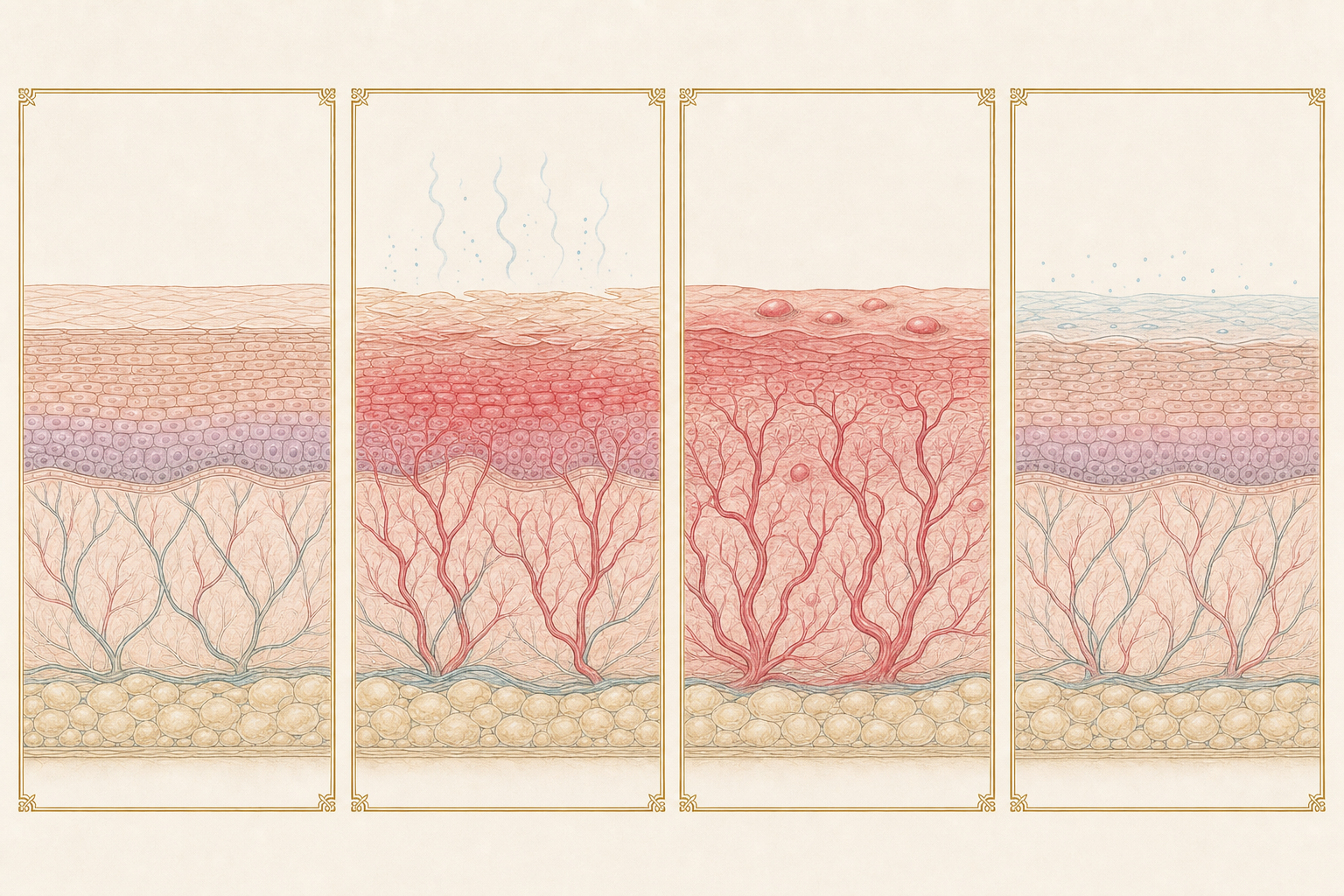
Water loss and dilated superficial vessels can contribute to sensitivity and persistent redness.
Vascular dilation and inflammation may bring heat, burning, redness or papules without blackheads.
Gentle barrier care may improve comfort while the vascular tendency remains.
Rosacea is not one presentation
One person may mainly flush; another may have persistent redness and visible vessels; another may develop papules and pustules. Dry, gritty, light-sensitive or inflamed eyes can indicate ocular involvement and need medical attention.
A rosacea-conscious facial at Idalia
Cleanse
A fragrance-free cream or lotion cleanser, fingertips and lukewarm water—without a cleansing brush or abrasive cloth.
Hydrate
A simple formula built around ingredients such as glycerin, hyaluronic acid, panthenol or a tolerated low-strength niacinamide.
Support the barrier
A bland moisturising finish may include ceramides, cholesterol, fatty acids, squalane, allantoin or beta-glucan.
Protect
Daily broad-spectrum sun protection and individual trigger awareness matter more than a complicated facial routine.
Steps normally removed from the facial
- No steam, hot towels, sauna pairing, heated stones or warming radiofrequency over reactive facial skin.
- No facial scrub, enzyme powder, cleansing brush, vigorous massage, diamond dermabrasion or aggressive hydrodermabrasion.
- No automatic salicylic, glycolic or TCA peel. Even a superficial lactic route requires settled skin, product-specific screening and a clear reason.
- No mud or clay mask when dryness, burning or barrier disruption is present.
- No microneedling through an active flare, inflamed papules, dermatitis or prominent vascular activity.
Where the three-wave light stand fits
The 660, 850 and 940 nm system may be considered as a supportive cosmetic step after photosensitivity, medication and heat response are reviewed. It is not vascular IPL or pulsed-dye laser and does not cure rosacea.
Cosmetic support does not replace diagnosis
A GP or dermatologist may use prescription options for inflammatory lesions or persistent redness. Visible vessels can be assessed for vascular laser or IPL elsewhere. Eye symptoms, thickening skin, diagnostic uncertainty or a sudden severe change should be referred.
Evidence used for this explainer
Keep this guide
Download the client leaflet
A concise two-page printable version for consultation notes and home-care reminders.
From education to treatment
What facial is suitable for rosacea-prone or sensitive skin in Dudley?
Redness-prone skin can react to heat, friction, strong acids and fragrance. Idalia’s relaxation-focused Rosacea-Calm Facial leaves out steam, scrubs and aggressive exfoliation, while keeping medical rosacea diagnosis and prescription treatment with the appropriate clinician.
View the Rosacea-Calm Facial