A sebaceous gland releases lipids that help lubricate the hair and skin surface.
Sebum · closed comedone · blackhead · inflammation
Sebum, comedones and active acne
Sebum is a normal skin oil—not dirt. Acne begins when oil and shed cells collect inside a follicle; inflammation can then turn a quiet blockage into a red papule, pustule or deeper lesion.
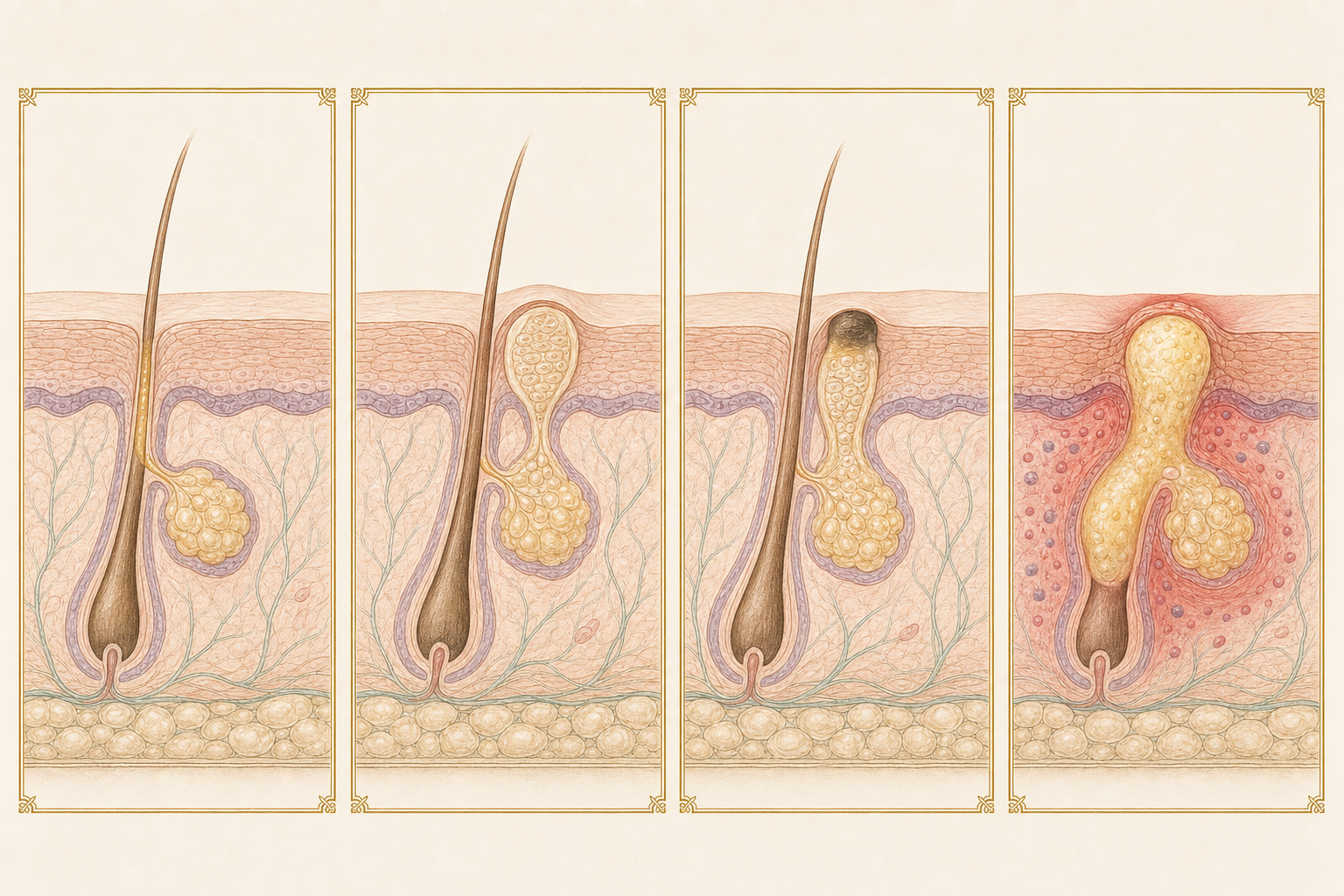
Excess sebum and compacted dead cells form a plug beneath a closed pore.
The exposed top of the plug darkens through oxidation. A blackhead is not trapped dirt.
Follicular blockage, microbes and the immune response can produce redness, swelling and a pustule.
What is sebum?
Sebum is a mixture of lipids made by sebaceous glands. It travels into the follicle and towards the skin surface, where it contributes to lubrication and barrier function. Oily skin is not automatically unclean, and repeatedly stripping the surface does not empty or switch off the gland.
Blackheads, whiteheads and inflamed lesions
Closed comedone
A pale or skin-coloured bump forms while the follicular opening remains covered.
Open comedone
The plug is exposed at the pore. Its dark surface reflects oxidation rather than poor hygiene.
Papule or pustule
Inflammation produces a red tender bump; a pustule also contains visible fluid near the surface.
Nodule or cyst
Deep, painful or scarring lesions sit outside a simple extraction facial and may need medical treatment.
How Idalia may help
- A consultation-led acne programme can separate non-inflamed congestion from active inflammatory or scarring acne.
- Suitable options may include a gentle cleanse, carefully selected salicylic or other superficial peel, limited extraction of appropriate non-inflamed comedones, barrier support and planned reviews.
- Red and near-infrared light may be used only as a screened supportive step under the device protocol; this system has no blue acne-targeting wavelength.
- Established acne scars are assessed after active inflammation is controlled and may need a different combination plan.
Microneedling does not belong over active inflamed acne
Needling, strong dermabrasion, vigorous extraction and stacking multiple acids over pustular, infected or heavily inflamed skin can increase irritation, spread inflammation and complicate healing. “More active” is not automatically more effective.
When medical care should come first
Seek GP, pharmacist or dermatology advice for painful deep lesions, rapid worsening, widespread inflammation, scarring, significant distress, suspected infection, pregnancy-related treatment questions or acne that has not responded to an appropriate course of care.
Evidence used for this explainer
Keep this guide
Download the client leaflet
A concise two-page printable version for consultation notes and home-care reminders.
From education to treatment
What treatment helps blackheads, spots and congested skin in Dudley?
Blackheads, inflamed acne and post-acne marks are not the same concern. Idalia separates cleansing facials, selected chemical peels, homecare and staged acne programmes so the route matches what is actually visible rather than treating every blemish alike.
Explore acne treatment programmes