From £45
Gentle brightening facial
A barrier-conscious facial with a non-irritating finish.
Explore this route ↗Melanin, triggers and pattern
A starting guide to excess pigment, sun spots, post-inflammatory marks and why a changing lesion is not a cosmetic treatment target.
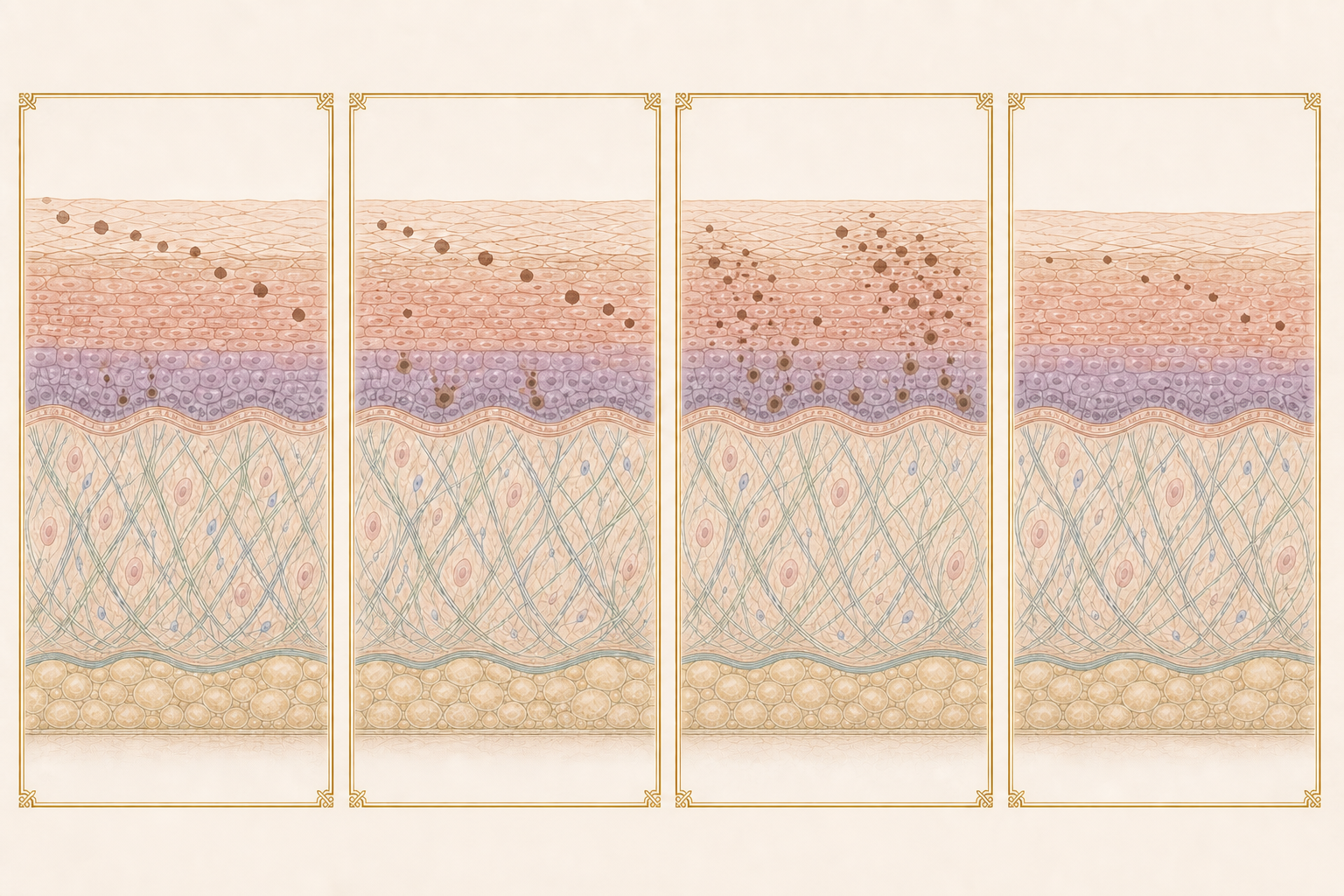
What it means
Pigmentation is a broad description, not one diagnosis. Melanin can become more visible after ultraviolet exposure, inflammation, hormonal change, medication or skin injury. The pattern, depth, timing and trigger determine whether cosmetic support, medical review or no treatment is appropriate.
Options at Idalia
Treatment is selected after your concern, skin response, medical history, suitable product route and realistic benefit have been reviewed.
From £45
A barrier-conscious facial with a non-irritating finish.
Explore this route ↗From £45
Only after pigment risk, skin type, sun exposure and actives are reviewed.
Explore this route ↗From £85
A cautious remodelling route for selected stable tone or texture goals.
Explore this route ↗New, changing, painful, severe or unexplained symptoms should be assessed by a GP, pharmacist, optometrist, dermatologist or another appropriate clinician before cosmetic treatment.