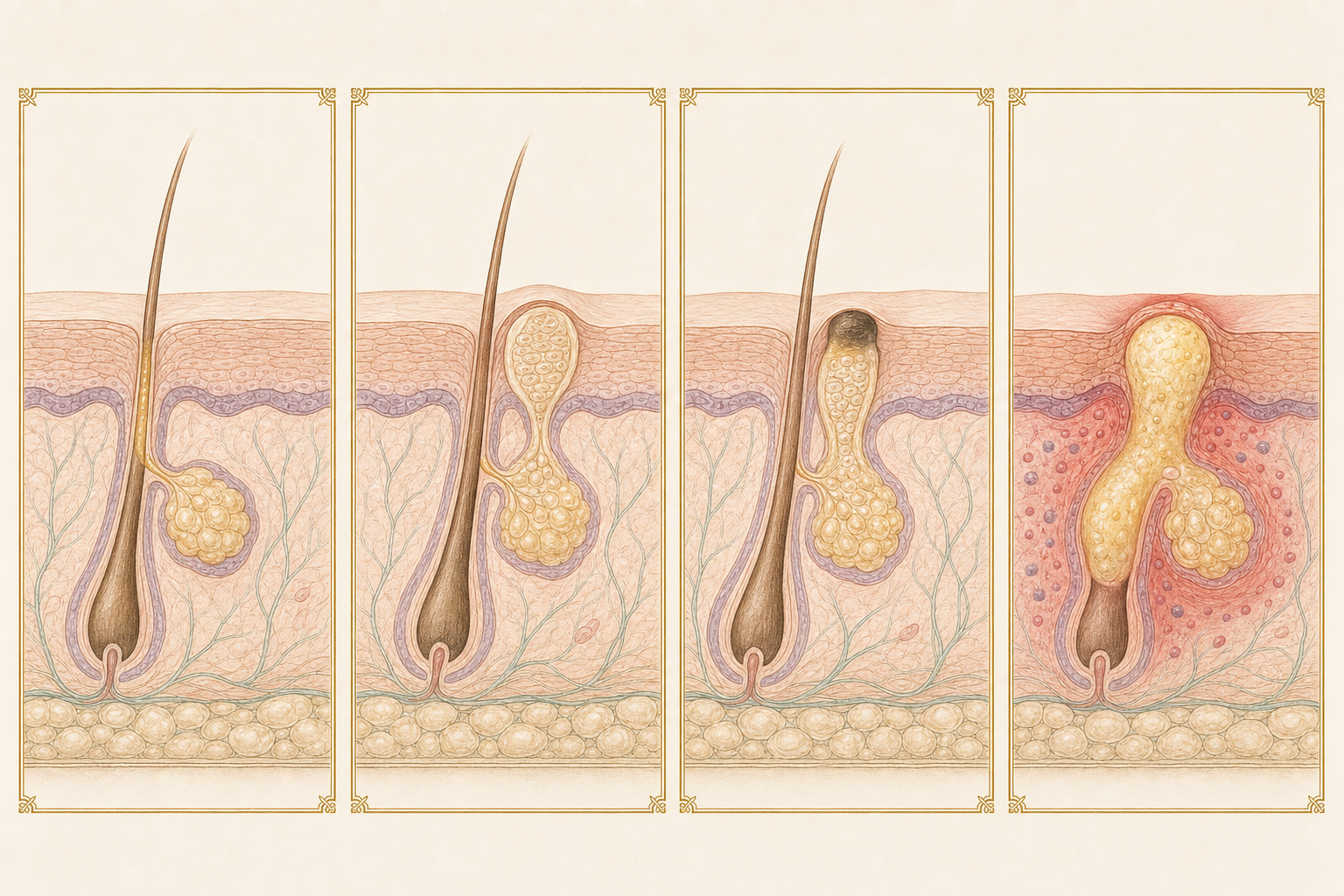
| Azelaic acid | Acne, post-inflammatory marks and some rosacea pathways. | Helps normalise pore-cell turnover and has antimicrobial, anti-inflammatory and pigment-modulating actions. | Cosmetic and medicinal strengths/formulations are not equivalent. NICE includes 15% or 20% topical azelaic acid in defined acne options. |
|---|
| Benzoyl peroxide | Inflammatory and comedonal acne. | Reduces acne-associated bacteria and helps clear blocked follicles without creating antibiotic resistance. | Can irritate, dry skin and bleach fabrics. Combination and frequency should follow instructions or clinical advice. |
|---|
| Topical retinoids | Acne and maintenance pathways; some retinoids have other licensed uses. | Change how follicular skin cells mature and shed, helping prevent microcomedones that become blackheads, whiteheads and inflamed spots. | Adapalene, tretinoin combinations and trifarotene are medicines. Topical retinoids are not used during pregnancy. |
|---|
| Topical antibiotics | Selected inflammatory acne or rosacea plans. | Reduce susceptible bacteria and, depending on the medicine, inflammation. | They should not be used as casual long-term skincare. Resistance and correct combinations matter; NICE advises against antibiotic monotherapy for acne. |
|---|
| Ivermectin or metronidazole | Prescription options for diagnosed papulopustular rosacea. | Act through anti-inflammatory and, for ivermectin, antiparasitic mechanisms relevant to rosacea biology. | Persistent facial redness may have several causes. Diagnosis comes before choosing a rosacea medicine. |
|---|
| Pigment-suppressing medicines | Selected melasma or hyperpigmentation pathways. | Different routes reduce pigment production, transfer or inflammatory triggers. | Hydroquinone and oral tranexamic acid require appropriate medical oversight. Oral tranexamic acid has important clotting-risk considerations and is not routine cosmetic skincare. |
|---|
| Oral antibiotics | Moderate to severe inflammatory acne or selected rosacea cases. | Provide systemic antimicrobial and anti-inflammatory activity. | Prescription course length, contraindications and antimicrobial stewardship matter. They are not a substitute for a supporting topical plan. |
|---|
| Oral isotretinoin | Severe acne meeting specialist criteria. | Strongly reduces sebaceous-gland activity and affects follicular keratinisation and inflammation. | Specialist-led medicine with pregnancy-prevention, mental-health and physical safety monitoring requirements. It is not an ordinary “last-step retinol”. |
|---|